Planning your space
Outdoor Conversation Seating: Plan Chairs, Sofas and Tables
Plan a comfortable conversation group by considering who sits together, where tables belong and how people move around the seats.
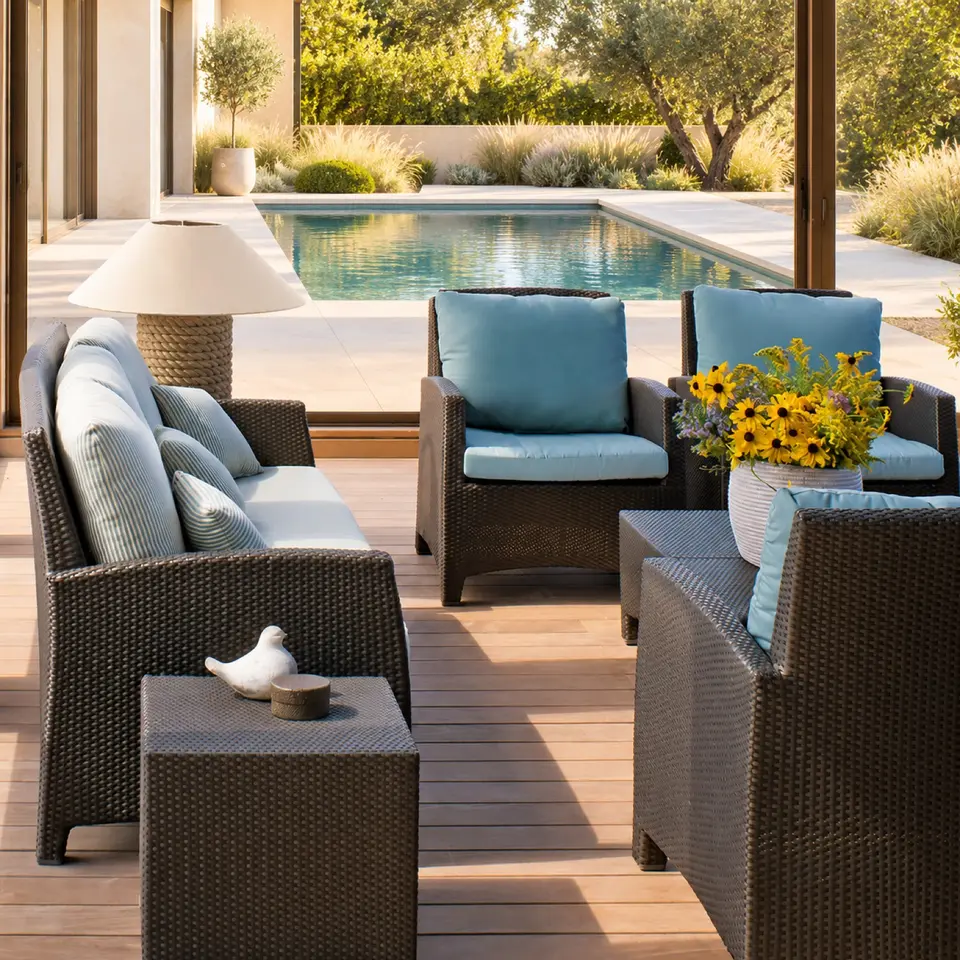
An outdoor conversation area has a different job from a dining arrangement or a row of sunloungers. People need to see one another, settle into a seat they like and put down a drink without turning every movement into a negotiation. Start with those everyday actions before deciding how many pieces the terrace can hold.
The most useful plan is a small group of seats that works as a whole. A large sofa is not automatically a better starting point than individual chairs, and a matching collection does not require you to buy every piece pictured. Compare the exact items and the way your household will use them.
Decide who usually sits together
Write down your normal group size and the kind of gathering you are planning. A couple reading outdoors may want two seats with their own tables. Four friends talking over coffee may prefer a group facing inward. An occasional larger gathering can call for a different arrangement from the one you use every evening.
Distinguish a regular seat from an occasional perch. Count the seats you expect people to use comfortably and discuss those exact products with the showroom. Do not turn a sofa measurement into a seating-capacity promise: ask about the selected SKU and try the seating position where possible.
Choose the relationship between chairs and a sofa
A sofa can give the group a clear anchor. Individual chairs can offer a choice of positions around it. On your plan, compare a sofa facing a pair of chairs with a group of chairs arranged around a table. Look at where each person faces, rather than counting only the number of furniture outlines that fit.
Avoid assuming that every seat should point towards the view. If conversation is the priority, angle the arrangement towards the people using it while leaving a place to enjoy the garden or terrace outlook. Keep access to each seat in mind; the person at the far end should not need everyone else to stand up each time they leave.
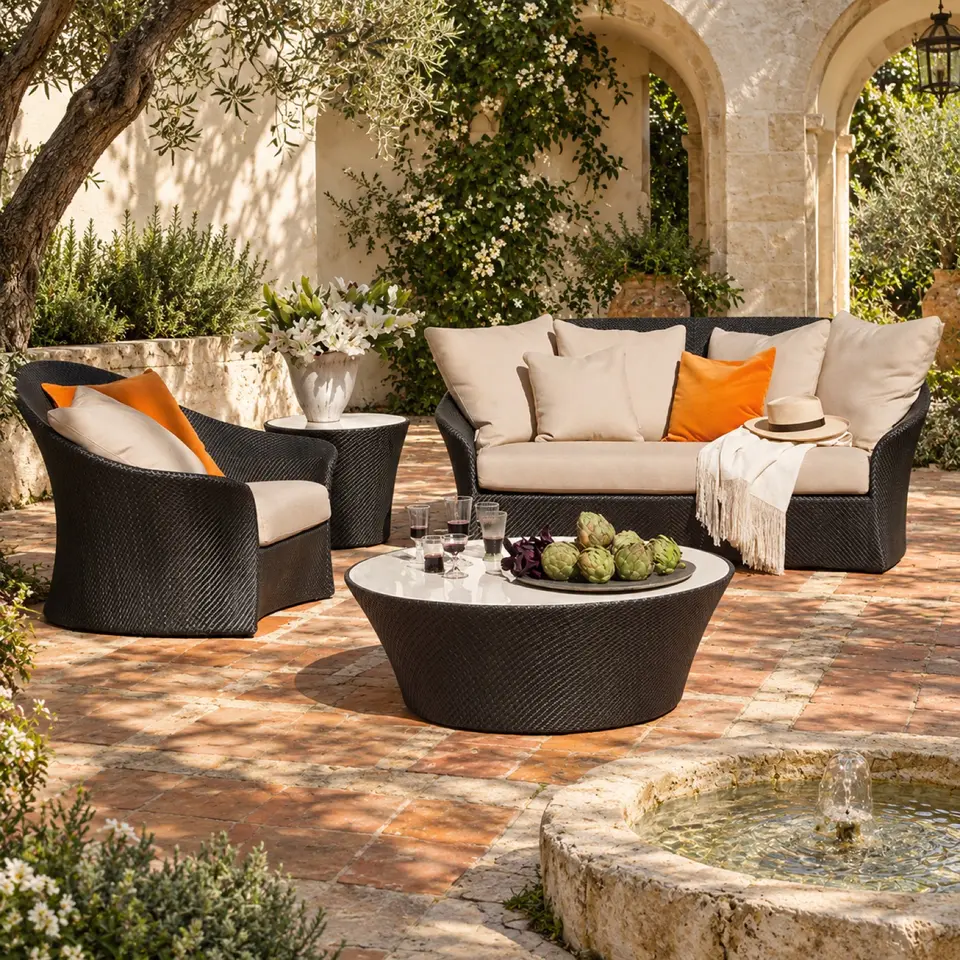
Place tables where they have a clear purpose
A central coffee table gives the group a shared surface, but it is not always equally convenient for every seat. Mark a place for drinks or a book beside the seats that sit farther away. Compare the table position while seated, including how you get into and out of the chair, rather than judging the gap from an empty arrangement.
Use the dimensions of the actual table and occupied seating on your plan. Check how a chair changes position when someone sits down and how legs, arms and cushions relate to the surface. There is no single spacing measurement in this guide that replaces checking your selected pieces and the people who will use them.
Keep the route through the terrace separate from the group
Draw the route between the house, garden, dining area and any frequently used door. Try to keep that route around the conversation group rather than between the seats and their table. Mark door swings, fixed planters and steps so that a neat furniture drawing does not hide an awkward everyday journey.
Check the arrangement for both a quiet evening and a fuller gathering. If you intend to move chairs between the two, confirm their handling requirements with the supplier. Do not assume a piece is lightweight, stackable or suitable for frequent repositioning from its appearance.
Compare the feel of the actual seat, not just the weave
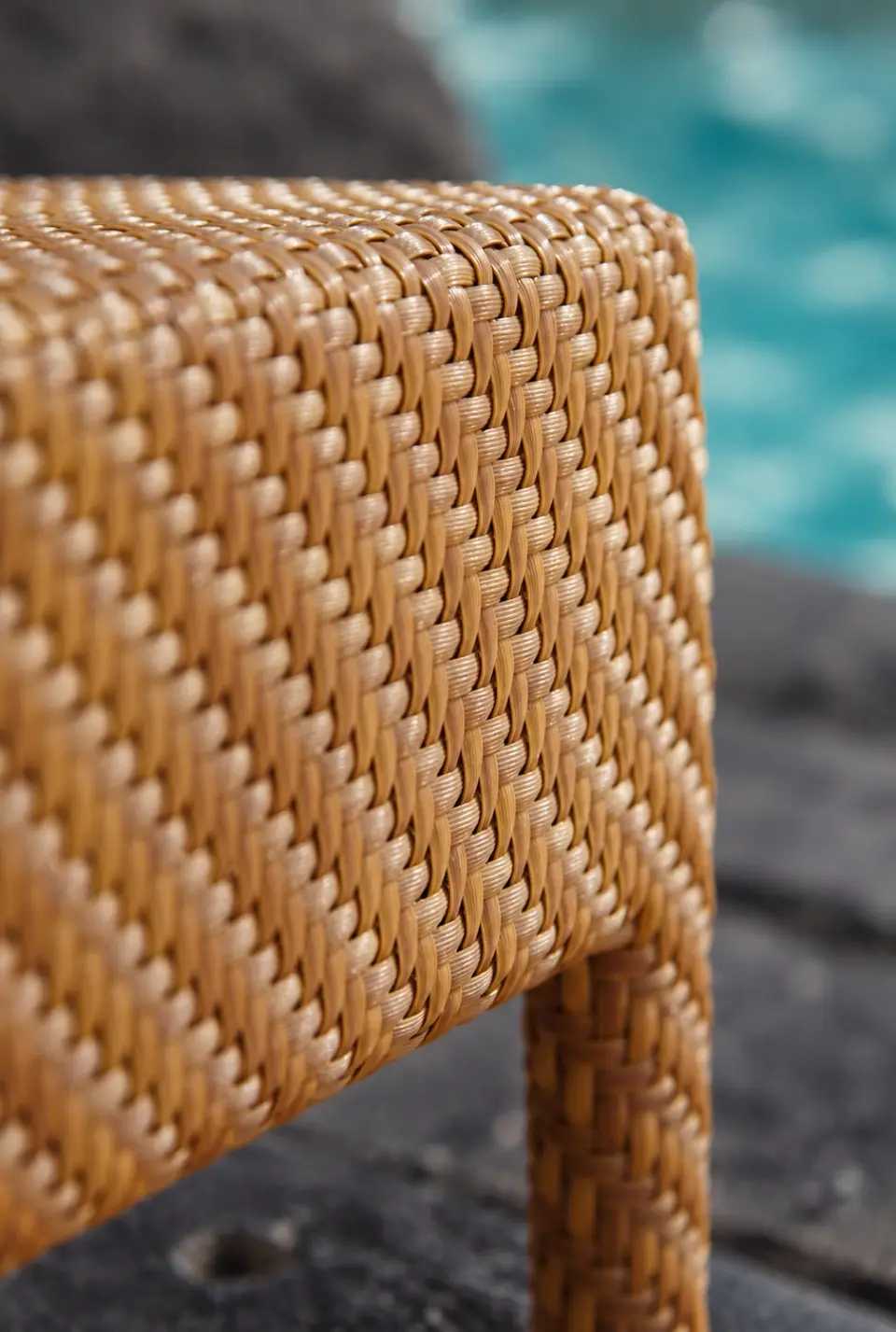
A collection detail can help you compare visual texture, but it does not tell you how the whole chair feels. Ask about seat depth, back position, arms and the cushion configuration for the exact SKU. When visiting a store, try the way you expect to sit: upright for conversation or more relaxed for a longer pause.
Record the selected frame, finish, weave and cushion choices where options are offered. Keep care questions component-specific and refer to the applicable policy. A visually similar material or a collection photograph does not establish the same warranty or maintenance requirements.
Read the care and warranty guide
Make one clear plan before ordering
Bring together the seating layout, exact product links and an itemised list of chairs, sofa pieces, tables and cushions. Check that the quotation describes the arrangement you planned, including optional components and quantities. Keep delivery-access questions alongside the layout so that the route into the outdoor space receives the same attention as the finished group.