Buying guides
How to Measure Delivery Access for Outdoor Furniture
Check the complete route to your outdoor space, distinguish product size from packed delivery size, and prepare a clear access record before ordering.
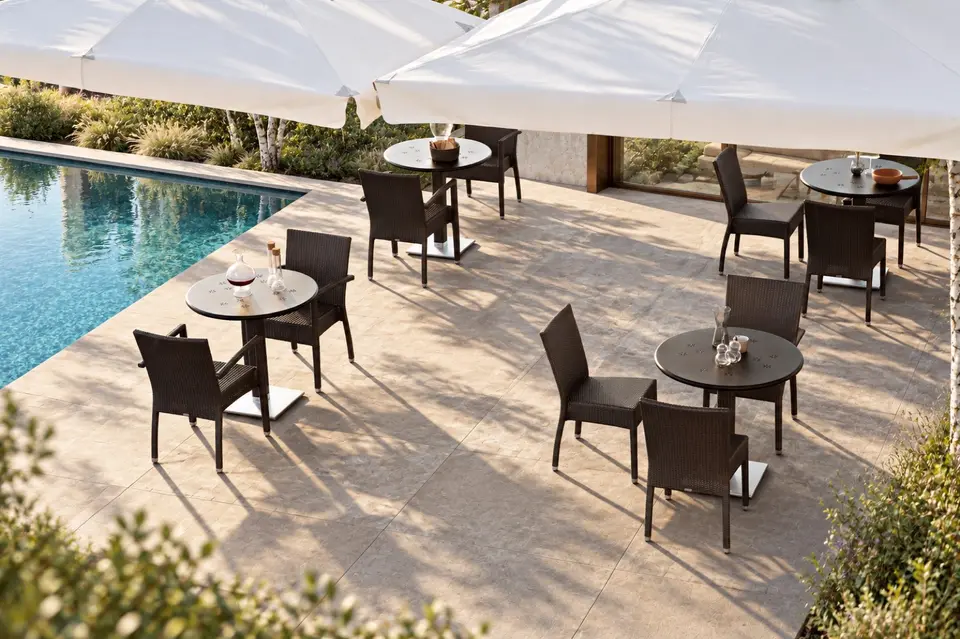
A furniture piece can fit beautifully on your terrace and still need a closer look at the route that gets it there. Before ordering outdoor furniture, record the journey from the delivery vehicle to the final position: gates, entrances, corridors, lifts, stairs and the last doorway onto the terrace. Share that information while you are choosing products, not only when delivery is being arranged.
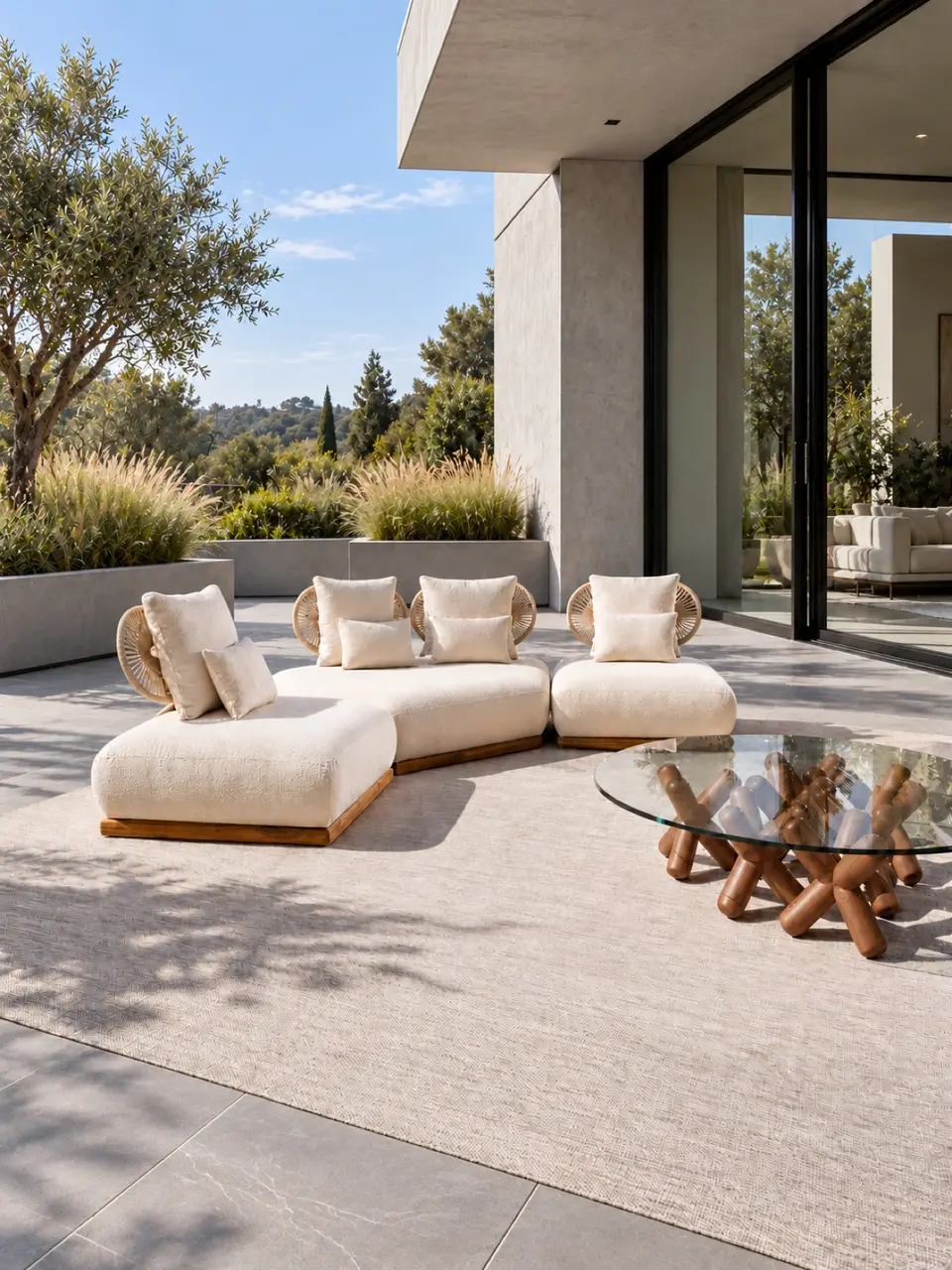
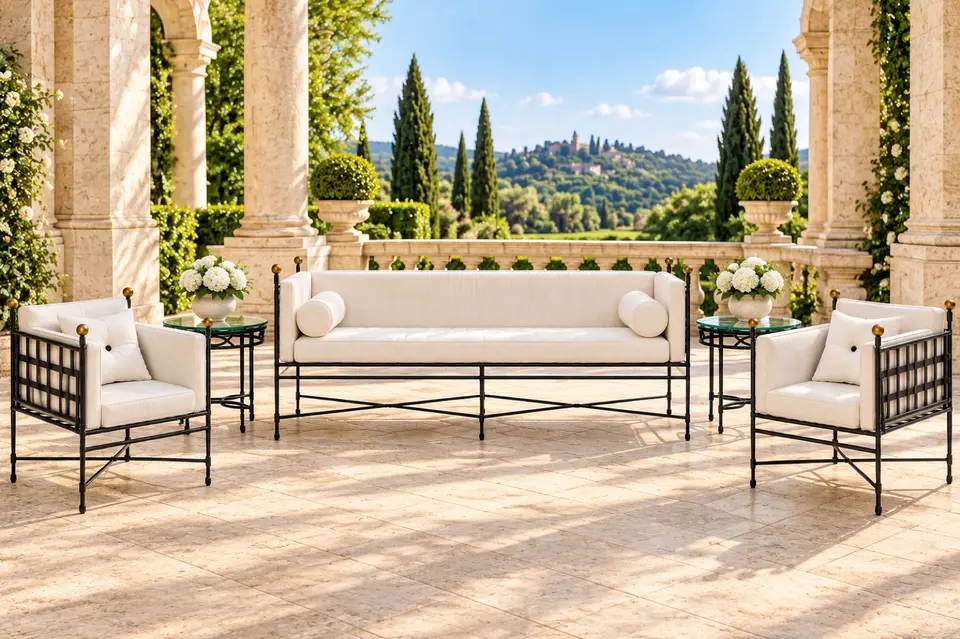
This guide explains what to measure and what to ask the delivery team to confirm. It does not establish that a particular item will fit. The Modo, Solenne and Bellavere collection images illustrate different furniture formats; they are not customer installations, packing diagrams or proof of a successful delivery route.
Start with the exact item being delivered
Make a shortlist with the SKU and quantity for every piece. Ask for the current overall product dimensions and the packed delivery dimensions, clearly labelled as different measurements. A published chair or sofa footprint describes the furniture, while the delivery unit may also include packaging and protection.
Ask which components arrive together and which arrive separately. Confirm whether any assembly is required and whether any part is intended to be removed for access. Do not infer removable legs, folding mechanisms, stackability or separable modules from a photograph or collection name. The answer needs to apply to the exact product you are ordering.
Walk the complete route once before measuring
Trace the route from the expected unloading point to the final furniture position. Draw a simple sequence and number each transition: outside gate, building entrance, corridor, lift or staircase, room and terrace door. Include any alternative route that the building team permits, but identify it separately so the measurements cannot be mixed up.
Look for fixed obstacles such as railings, low beams, narrow passageways and doors that open into a turning space. Photograph these from more than one direction. Record anything that cannot be moved and anything that may be temporarily cleared with the responsible person’s agreement. Do not assume that a door, railing or fitting can be removed.
Measure the clear opening, not just the door frame
For each doorway or gate, record the usable clear width and height with it open as it will be during delivery. Note how far the door opens and whether handles, stops, closers or nearby walls reduce the space. Photograph the opening with the tape measure visible where practical, then label the photograph with the route number.
Also record the space immediately before and after the opening. A narrow corridor opposite a doorway can prevent an item being presented at the angle you expected. Keep width, height and depth labels consistent throughout your notes; a bare number without its location or direction is difficult for a delivery team to interpret.
Treat turns, stairs and lifts as separate checks
At a corner, record the widths of both passages and the space available to turn between them. For stairs, include clear width, landings, overhead restrictions and the position of fixed handrails. A tape measurement at the widest point of a staircase can miss the place that matters elsewhere on the route.
If a lift is involved, record its clear door opening and internal dimensions, as well as the approach to the lift doors. Share the building’s delivery arrangements and any relevant lift restrictions with the delivery team. Dimensions alone do not establish a safe handling method or permission to use equipment; let the responsible teams confirm those matters.
Do not use a diagonal as a guarantee of fit
An item’s diagonal and a doorway’s width are not a complete access assessment. The object has depth, the approach may be restricted and packaging can change the delivered shape. Treat sketches and measurements as information for review, rather than declaring a fit from one calculation or from a smaller-looking item in a photograph.
Ask the supplier or delivery team what additional information they need for a tight route. A site check may be appropriate where uncertainty remains. Avoid improvising a lifting route or a handling technique yourself; confirm a workable delivery plan before committing to a configuration that depends on it.
Check every piece, including tables and accessories
Record the route for each furniture type instead of testing only the largest-looking item. A sofa, table, tabletop, chair and umbrella component may arrive in different shapes or delivery units. Confirm the scope of any packing, assembly and positioning arrangements so that everyone is discussing the same items.
Include the final transition onto the terrace and the path to the intended position. Keep access, drainage and normal movement in mind when planning where the furniture will be placed. The delivery check and the occupied furniture layout answer different questions, so keep both drawings with your shortlist.
Send one clear access record with your enquiry
A useful access record contains the SKU list, product and packed dimensions supplied by the seller, the numbered route sketch, clear opening measurements, turn and landing details, and labelled photographs. Add the site contact, permitted delivery times and any building requirements already confirmed with the responsible team.
Ask for any unresolved access questions to be answered against that record before the order is finalised. If a product choice changes, check its delivery dimensions again rather than carrying forward approval for the earlier item. A little clarity at this stage makes the furniture selection and delivery discussion much easier to coordinate.
Share your furniture shortlist and access details with Loom Crafts